All ideas shared on this blog are my own and do not necessarily represent the views of my employer.
Final Post: The Importance of Being a Connected Educator

After researching all of these topics, the one that stands out the most to me is one that I never thought much about. Being a connected educator. Before this course I never thought about how big of an impact it could have on my classroom, and how simply it could be done.
Being connected to my students, coworkers, and the community around the school can create such a positive atmosphere inside the classroom. Parents are going to know whats happening in school, students will have the chance to show off what they are doing and connect with people that have opinions and experiences with topics they are interested in. This also a great opportunity to get kids educated on the importance of their digital footprint.
One of the great things about getting connected as an educator is how easy it can be done. You can do it by using social media platforms like Twitter and Instagram, participating in online discussions, spending time with colleagues, or anything else that is going to get you in contact with educational stakeholders and contributors. I have not taken advantage of social media platforms in the past for educational purposes, but it is something I’ve wanted to do. I am hoping that this is the year that I use Twitter to connect with other educators and promote my program at my school.
Future Trends
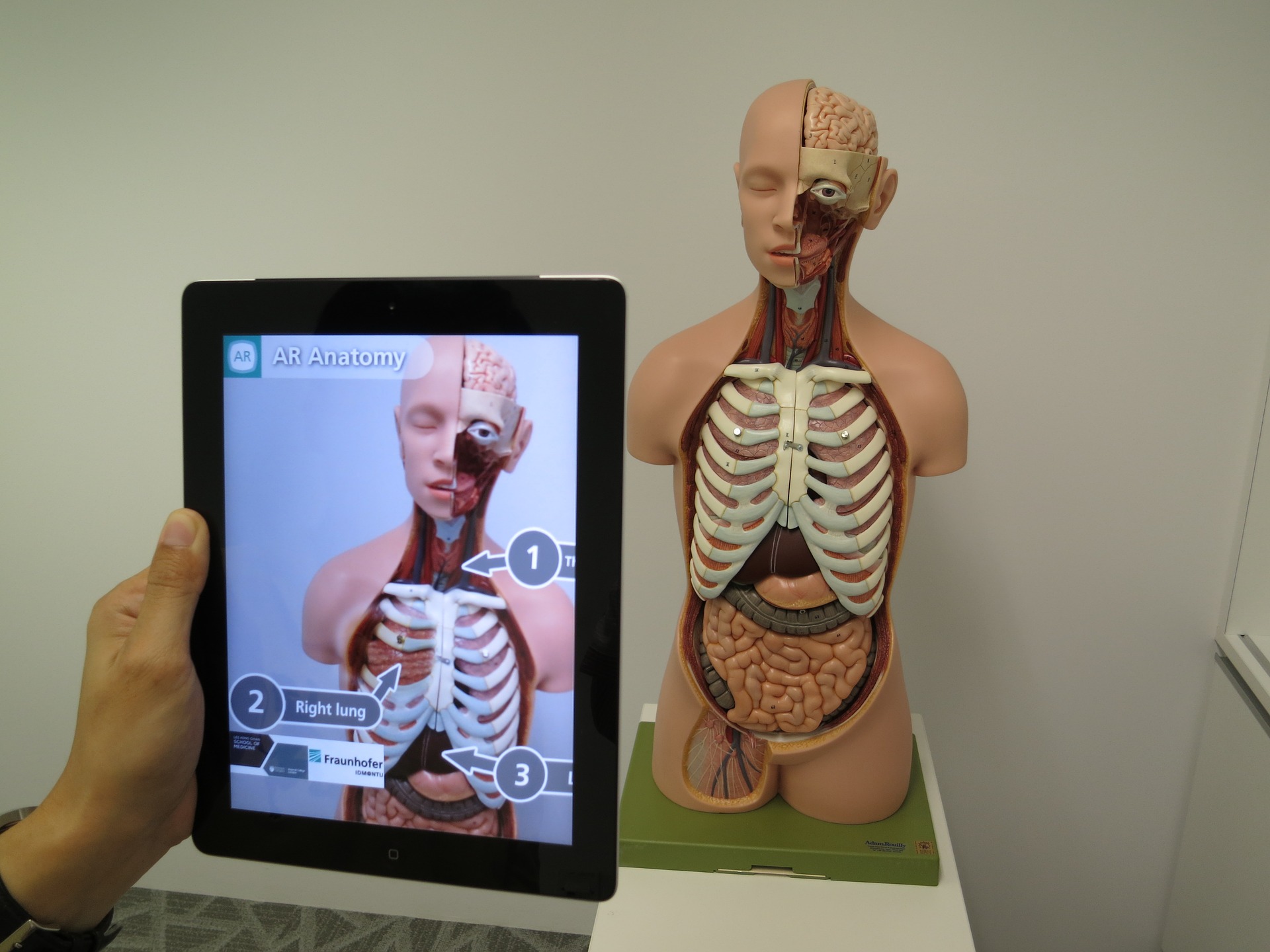
This year’s Forbes digital trends for school’s article featured the five tech trends that writer Daniel Newman calls the top “digital transformation” tools for the coming school year. The items Newman mentions are augmented reality, personalized learning, internet of things, AI and big data, and security.
I have a little bit of experience with augmented reality from different demonstrations, but I have not really seen it incorporated into curriculum in a big way. At this point I see it being used to demonstrate pieces of technology that will soon play a big role in society, but isn’t quite there yet. When Newman talks about personalized learning, he provides the example of a program that allows students to use a speech to text tool that makes it easier for students with disabilities to complete writing assignments online. This is a tool that I have seen in use before, and as the technology advances I see it playing a larger role in schools because of its benefits to students that struggle with language and writing. Before reading this article I was unfamiliar with phrase of internet of things, I am glad I now know the phrase because it is such a popular trend. This will absolutely play a big role in education, both in adding new tools to the classroom, and also added distractions. This is going to be a big part of everyday life though, so incorporating more internet enabled devices in the classroom will give students a chance to get acclimated to how the technology is going to effect their lives outside of school. AI and big data is brought up in this article as a possible means of adjusting the use and necessity of standardized testing. The last tool he mentions is security. Internet security is already an issue in schools, and it will only continue to grow. Any new security technology that comes available is definitely going to be jumped on by schools to protect students.
The other trend that I have noticed, especially in the skilled and technical sciences area, is the use of simulators in the classroom. There are very advanced simulators for welders, flight training, and equipment operating that have been introduced to college and high school programs. The only problem with these simulators is the cost. They are not affordable for most schools without corporate partnerships or grants, but hopefully as the production of these simulators increases, so will the access to them.
The Role of Standardized Testing in Schools

Is standardized testing a necessity in schools in the U.S.? What is the purpose of standardized testing? Are the current standardized tests being used in schools fulfilling the purpose they were created with?
According to Mark D’Alessio, standardized tests provide a way for checking progress and measuring growth. Two things are worth noting here. The first is that D’Alessio is not an educator, but I do agree with his stance. The second is that this can refer to much broader groups than just individuals. We can certainly use the tests to monitor student growth in tested areas, but I find that the real value of standardized tests is as a way to monitor school’s, district’s, and state’s growth. As educators, we need to be held accountable for doing our job, and as of now I see standardized tests as the best way to do that at the state and national level.
Maddie Abbot wrote an an article called “The case for (healthy) standardized testing” which outlines several major issues with educational achievement in the United States. These include adult illiteracy, failing to teach students, and grammar problems. The assumption being that once we identify these issues, we can then work to fix these issues at the national or even state level. In my eyes, that should be the central role of these tests. We can find these systemic issues and fix them, and then once we have done that, we will be able to show off our improved scores that ideally would mean we have a better prepared labor force to send out into the world. Unfortunately, the way the scores are used currently is more focused on finger pointing and used for awarding funding. A shift in the focus of these tests, or rather the cumulative data produced by the test, could lead to some real effective educational changes.
There are several issues with standardized tests currently. Alexandra Pannoni wrote an article on ACT test results. She talks about the issues that are keeping ACT results from going up. This is interesting me because the ACT is really the only standardized test that I interact with in the year. As an elective teacher I don’t have a standard test for my classes, but I do help proctor the ACT to juniors now that it is the standard test used for juniors in Nebraska. Pannoni says that many of the students that take the college readiness test have no intention of going to college, which obviously limits their motivation, but is also innately unfair. If a student is not intending to go to college, they shouldn’t be compared to students who are preparing to go to college in a college readiness test. I believe in the intent of standardized tests, but this example does illustrate that it is difficult to have such a broad test that does evaluate students based on the actual situation they are in.
Classroom Design

Classroom design is a topic that comes up in education quite often, and it always haunts me. The classroom that I teach in is a computer lab. There are two banks of computers that run perpendicular to my desk, and there are computers on either side of each bank. All of this is permanently built in place in the room. This haunts me because there is no place in the room that I can see every monitor from. It is a real bummer, but luckily it does keep me moving. According to an Education World article this is a positive. The more I am moving around, the more I am “disrupting disruptions”. I just wish I was able to change my proximity to some students and still see what the other students are working on.
Another article, this one on Edutopia, discusses the positives of flexible seating. Flexible seating is a variety of seating options being available to students that include different levels and materials to sit on. The benefits mentioned in the article include involving some movement in to the students day and more engagement because of the seating options. Fortunately for me, I don’t spend my entire day in the computer lab. Part of my day is spent in the woodworking shop, where students spend of much of their time on their feet working with equipment or standing at tables. The second half of my day is spent building a house with students so there is no seating for them. I think having those classes mixes in a great variety of “flexible seating” for my students. They may not be experiencing what is traditionally thought of as flexible seating, but they are getting the same benefits.
Jeff Paige, another engineering teacher at my school. recently added flexible seating in his classroom. Mr. Paige has a computer lab also, but luckily his computers are set up around the outside walls of his room in a horseshoe shape. He removed the regular height tables and chairs from the middle of the room and had them replaced with tall tables. Students can work at the computer tables in a chair, standing at the tall tables, or sitting on the floor. Jeff and his students have really enjoyed the seating options available. If I ever get the chance to redesign my room, that is definitely the arrangement I would like to have.
What are your thoughts on flexible seating? Do you have flexible seating? What is it like or what would you include if you had the option to go to flexible seating?
Distraction Fads

Fidgets, are they the miracle device that can help hyper students focus, or are they engineered by the devil to create more distractions in the classroom? If you surveyed teachers across the country you could probably find individuals that fell anywhere along that spectrum. Personally, I’m somewhere in the middle. I don’t encourage their use in my classroom, but I also rarely have issues with them. When fidget spinners first got popular a couple of years ago it was apparent that students were not bringing them into the classroom to help them focus, they had them to play with. To me, it was a similar issue as cell phones, create a policy and stick to it. If you were using the fidget spinner to bring attention to yourself or if your classmates around you were focusing on the spinner, it was going in my drawer. After a couple of weeks of students getting fidget spinners taken away, they weren’t as much of an issue. The other thing that is very helpful in my classroom is the number of projects students work on. In the woodshop, spinners weren’t an issue because they were working on a woodworking project. In my engineering classes students spend so much time creating and drawing that they either don’t get the fidgets out, or they are often helpful in keeping them focused on their own project, rather than their friends in the classroom. According to an ADDitude article, providing a physical outlet is beneficial to students with ADHD to help them focus. The fidget device is supposed to help with this. At times when students are able to use these devices without distracting other students or demanding too much of their own attention, I have seen them be very effective. An Education Week blog about fidget spinners mentions a student that points out that she has noticed they are bigger distraction at “inappropriate times”. I agree completely with that statement. The times I noticed the spinners as a problem were the times I was giving whole group instruction. Those are the times where it is very easy for students to be distracted by anything other than the teacher. Because of this, I certainly understand why teachers that spend more time in whole group instruction are unsatisfied with the devices in their classroom’s. Here is a brief article by Beverly Bird that shows fidgets that might be helpful to students, and adults, including one that is designed to be less distracting to others.
I would be happy to hear what kind of fidgets you have seen students use and what your thoughts are on the devices.
Growth Versus Fixed Mindset

What is a growth mindset, and what is a fixed mindset? The answers to these questions are fairly straightforward, but the classroom implications of each type of mindset are very important. Furthermore, each type of mindset will direct the feedback that a teacher gives in a classroom.
A fixed mindset is based on the assumption that a students level of intelligence is a natural ability. In this type of mindset, assignments and tests are essentially an opportunity for students to demonstrate the level of intelligence they were born with. An Edglossary article on the writing of Carol Dweck explains that a fixed mindset person thinks “that talent alone creates-without effort”. The “without effort” comment shows that this type of mindset is focused on natural talent, a person simply is or isn’t intelligent.
A growth mindset is focused on a person’s ability to gain intelligence through practice and effort. I like this quote from a Develop Good Habits article, “when people believe they can get smarter, they realize that their effort has an effect on their success, so they put in extra time, leading to higher achievement”. This mindset empowers students to take control of their learning to improve themselves.
I think most educators, myself included, have a growth mindset, and hope for our students to have one as well. Obviously some people are born with more natural intelligence, but we all show growth in areas that we work at and spend time with. Some students will grow at a faster rate than others, but students that are doing the work and believe they can get better are going to improve. So the question becomes, how do we encourage students have a growth mindset? This article by Katie Findley outlines some ideas for accomplishing that. Findley says to set attainable goals, reward and focus on a students effort rather than intelligence, and “help students focus on and value the process of learning”. I am looking forward to trying these tactics to hopefully help students move to a growth mindset, especially in cases where students are struggling and they think they can not do something.
Social Media

I have been sold on using social media in the classroom, especially for me as a way to share out the things we are doing in class, for about three years. The problem is I have done a terrible job of following through with it. I use Twitter frequently for news updates, Husker football discussions, staying in touch with friends, and following other teachers that show off what is happening in their programs. I also follow quite a few of my coworkers and I see how Twitter gives them a platform to connect with parents and the larger community around the school. An Edutopia blog post by Jim Asher (https://www.edutopia.org/blog/making-case-social-media-in-schools-jim-asher) discusses more positives about using social media including professional development opportunities community building within the school. These are great added benefits, but my focus moving forward will be on using the platform to display the great things that students are creating in my classroom and shops and also encouraging students to use Twitter to advertise their own great work. That creates an immediate real world example of using the platforms available to them to self advertise, especially if these students are wanting to pursue a career in the construction or drafting fields.
Another article (https://www.teachthought.com/technology/6-pros-cons-social-media-classroom/), this one by Aimee Hosler, addresses some risks associated with encouraging students to use social media for school. She mentions cyber bullying and in class distractions. These are concerns of mine, but my school has a lot of great resources in place to help with the issue of bullying, and the distraction issue is just another class room management issue that can be easily handled. To combat cyber-bullying, my school has handbook policies, digital citizenship courses, and a great technology integrationist that has experience with recognizing the behavior and helping teachers handle the issue. Those factors help alleviate much of my concern.
As I stated in the beginning, I am sold on using social media in my classroom, I just simply need to start doing it to promote what is happening in my classes. This will help keep parents and the community informed as well as promote the school and the district. Twitter is a great platform for doing this and already widely used at my school.
Common Standards

As an elective teacher in the Skilled and Technical Sciences field, I don’t have any previous interactions with the Common Core standards. This article (https://www.usnews.com/news/special-reports/articles/2014/02/27/the-history-of-common-core-state-standards) by Allie Bidwell does a great job of outlining how the Common Core standards came to be. The intent of the standards is to create national standards for core classes that are stringent enough to provide an accurate description of how a student is performing and also to help students prepare for the workforce or post-secondary education. Bidwell mentions the original hesitation that many had due to states losing some autonomy for creating their own curriculum, but says that 45 states had adopted the common core standards at the time of the article.
Another article (http://www.teachhub.com/what-happens-if-we-abandon-common-core), on Teach Hub written by Jordan Catapano, dives into the topic of states turning their backs on the Common Core. Catapano says that Indiana was the first state to return to their own state standards, but that several other followed and more still were considering the move. The reasons for this stated in the article were largely for local autonomy but also mentioned “developmentally inappropriate” standards at the lower level.
Researching this topic has shed light on why the Common Core Standards were written and why some states have decided to turn away from them, but as I am so inexperienced with the standards it is hard for me to have much of an opinion on if they achieve the goal they set out for. A Washington Post article that features writing from John T. Spencer(https://www.washingtonpost.com/news/answer-sheet/wp/2012/12/04/common-core-reading-pros-and-cons/?utm_term=.ce5a32971498) does a good job of describing a few pros and cons of the standards written for the reading curriculum. Even though the list was created with the reading standards in mind, there are a few crucial take-aways that I picked up on that seem universal across curriculum’s. From Spencer’s pros, I appreciate that the standards make it easier for students that move to adapt educationally, and that the standards focus on a shift toward more critical thinking. The negative that stood out to me was the absence of local influence on the standards.
I would say overall I would prefer state written standards. I know the process for writing the standards for skilled and technical sciences and I’m very comfortable with how it is done. Teachers drive the standard writing and they do it in a way that is easily understood. It’s great that education is a national concern, but I believe that state’s are able to create their own rigorous standards.
Genius Hour

Genius hour is a concept I hadn’t heard of before diving in to research this new educational trend. Genius hour is basically a Google policy that allows workers twenty percent of their work time to work on a project of their own creation that has been incorporated into schools. According to a Business Insider article ( https://www.businessinsider.com/york-school-lets-kids-spend-20-on-anything-they-want-2016-5), a teacher by the name Kevin Brookhouser started the trend at his school in California. He allowed students to spend twenty of their school day working on their own project. Brookhouser says that he had students create products, video series, and green energy initiatives with the time they were given.
Another article (https://musicuentos.com/2014/01/novicegh/) discusses some of the issues with implementing the genius hour in schools. The article’s author, Sara Elizabeth Cottrell, talks about world language teachers trying to create a curriculum incorporating genius hour. Cottrell states that novice learners in a content area lack the depth of knowledge and vocabulary to really create at an advanced level. This is a good point, but she also mentions that some teachers involved in the process were able to modify the idea in a way to make it work for the curriculum.
While looking into ways that other teachers are using genius hour, I came across a We Are Teachers post by Elizabeth Mulvahill ( https://www.weareteachers.com/what-is-genius-hour/) that outlines some steps for implementing it in the classroom. The steps she mentions; topic selection, generating a “guiding question”, research, and finally creating something, remind me of a Project Lead the Way (PLTW) course that I taught when I first started teaching. The class was a capstone course that allowed seniors an opportunity to spend a whole year identifying a problem and working to solve it. After seeing something similar to this in action, I think it would be a very exciting thing for students to try, but would probably need to be limited to students with a strong passion or a high amount of self motivation. Based on this, to me it seems genius hour would be a great option for some students, but probably not beneficial for all students.
I would love to hear how some of you think genius hour could be implemented in your classrooms, or if you think it is even a positive use of time.
Connected Educators
What is a connected educator? How does being a connected educator affect your classroom? Will being a connected educator help your students? These are all important questions when reflecting on the connectivity of your classroom and teaching style. Being connected has been major priority at my high school over the past few years, and the teachers that have embraced it have seemed to enjoy the benefits of being connected.
First of all, being a connected educator could mean many different things, but at the heart of the topic is leaving your classroom open to the influence of others around you. This could be colleagues, administrators, other classrooms, or content experts. You can better connect your classroom by visiting others, bringing people into your classroom, or incorporating new techniques you learn from others into your classroom. An article called “The Loneliness of Teaching” (https://www.weareteachers.com/loneliness-of-teaching/), author David Webb details many different ideas to help teachers get connected to others in order to let that connectivity positively affect the teachers’ classroom. Many of his ideas are as simple as going to activities to show support of students and getting together with other staff members outside of school. These small things can help build a better in class community that has a positive impact on the teacher and the classroom. Using social media to promote your classroom and connect to other educators is another way to get connected. According to a Joshua Bolkan ( https://thejournal.com/articles/2015/09/02/research-9-in-10-teachers-dont-use-social-media-in-the-classroom.aspx), 87% of teachers are not using social media in the class room. This is a very easy way that many teachers could increase their connectivity.
Having a connected classroom and teacher can greatly benefit students. As I mentioned earlier, this has been a big push at my school. Teachers are encouraged to spend time in other classes, we have in the lounge to share what great things we are trying out in our classrooms, and teachers invite other classes to watch presentations that they have going on. I have seen all of these things bring excitement to my students and on days with these things happening I have noticed less behavioral issues.
What are some things you or other teachers do to get and stay connected? What benefits or negatives have you noticed from being connected?
 Scott's Education Blog